KS3 Curriculum
ENGLISH
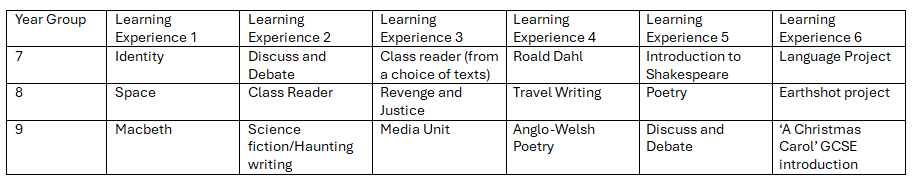
Year 7 students are initially taught in their form groups, before being regrouped to allow for suitable levels of challenge and support with literacy skills. We aim to provide a broad introduction to both English language and different forms of literature across Key Stage 3, which reflect the Four Purposes of the Curriculum for Wales and our What Matters Statements for Language, Literacy and Communication.
A focus on building confident reading, writing and oracy skills underpins all topics taught in years 7-9 and the texts used to support this learning become increasingly challenging as students move through these three years. Our aim is to equip our students to be confident in their use of language in different contexts and for different purposes.
As we now have an integrated approach to teaching English language and literature at GCSE, we are building this approach into our Lower School teaching, particularly in year 9.
MATHEMATICS
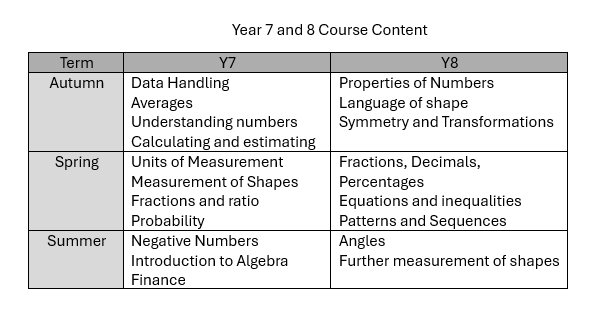
Students are set by ability for mathematics. The main themes of number, measures and statistics, algebra and geometry are reviewed and developed several times per year, alongside a programme of investigations and projects.
There is an emphasis on fluency and reasoning, as well as managing money and finance, and relating real-life scenarios to local, national and global situations.
SCIENCE
In Year 7, students are taught in their tutor groups before being regrouped for the remainder of Key Stage 3. Our new science curriculum is built around the four purposes of the Curriculum for Wales, offering engaging and challenging topics that nurture curiosity and develop young scientific thinkers.
We focus on practical, hands‑on lessons that help students build important skills like teamwork, problem‑solving and resilience. Our learning is designed to be relevant and matched to students’ interests, helping every student reach their full potential.
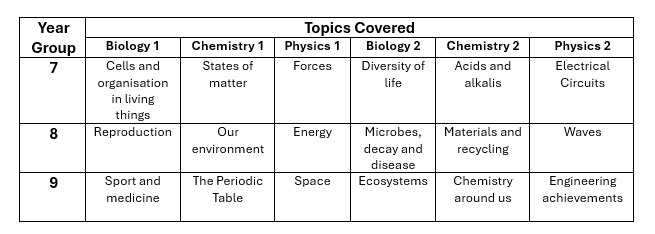
Each year of study is structured around an overarching theme that connects science to real‑world applications. Although we teach science as a combined subject, the themes include distinct topics from biology, chemistry and physics. These are outlined below, with additional support available on BBC Bitesize (KS3 Science – BBC Bitesize).
ART
The Art Department has 2 specialist art rooms with an adjoining room which we use for photography and as the Sixth Form study area. We also have the Arts Community room on the ground floor which we share with the other Expressive Arts subjects for group work and workshops. We have a suite of laptops which students use for digital editing and for research. Students work is regularly celebrated on the departments Instagram account whs_art_department and on the School’s Twitter (X) account.
Students are not set for art. They have 1 x 50 minute lesson in Year 7, 2 x 50 minute lessons in Year 8 and 1 x 50 minute lessons in Year 9.
There are 3 main projects in each year based around the formal elements and skill building, ‘Cynefin’ Welsh arts and culture and a collaborative project with the Expressive Arts AOLE (Currently Years 7 and 8 only).
We also do several mini projects throughout the year to reflect on notable historical events such as Remembrance Day.
COMPUTER SCIENCE
Year 7 students are taught in form groups. They are taught how to use technology responsibly and safety and undertake a number of Digital Citizenship modules. Students also complete models that further focus on data and computational thinking; they learn to write basic algorithms in order to solve problems. Students learn how to code by using blocks of code alongside BBC Microbits.
Students learn about technology hardware, the fundamentals of the world wide web, threats to data and how to protect against these threats. Students learn about modelling and data handling using spreadsheet and database software.
As part of our Cynefin module, students are asked to solve a problem in Wales and produce a poster pitch of their idea. We also incorporate Welsh music into our coding with microbits unit.
We have eight designated computer suites with over 200 PCs across the school site, in addition to these we have teaching sets of laptops and chrome books for use in the classroom. We operate a homework club at lunchtime to allow students to complete work and to print out or upload work to Google Classroom.
Each year of study is structured around an overarching theme that connects computer science to real‑world applications.
Year 7 Surviving in Antarctica
How do we explore extreme environments?
Year 8 Creating a sustainable future
How does reusing waste protect the environment?
Year 9 How have new inventions played a significant role in modernising human life?
Technology Timeline 100 Years of Progress
DRAMA
The Drama department comprises a modern drama studio featuring programmable LED lighting controlled through iPad technology, complemented by the Theatre Clera stage facility.
YEAR 7 Students develop their skills of exploring, creating, responding and reflecting through considering three big questions: “What core skills do we need to develop to succeed in the Expressive Arts?”, “How do the Expressive Arts reflect the Welsh culture and traditions?” and “How do the Expressive Arts help us develop a positive sense of self-esteem?”. These questions provide students with a wide range of motivating learning experiences designed to support, strengthen, and develop their abilities within and across The Four Purposes.
YEAR 8 Students continue to explore The Four Purposes through considering the question “What role do the Expressive Arts play in cultures throughout the world?”. Students explore Melodrama, Soap Operas, Shakespeare, Naturalism and look at influential practitioners for drama such as Brecht!
YEAR 9 Students continue to reflect on how Drama can be used to portray
important topics as well as being introduced to different elements of Drama (lighting, costume and design) The topics range from Peer Pressure, Theatre in Education and Roles in the Theatre.
GEOGRAPHY
Year 7 students cover the following themes: Mapping my local area, My local River (River Severn), Welsh Coastlines, UK and Wales Population, the UK, Wales and Cynefin.
Year 8 students cover the following themes: Weather and Climate, Extreme Weather, Biomes – The Rainforest, Cold Environments – Antarctica and Inspirational leaders – David Attenborough – Our Fragile World.
Year 9 students cover the following themes: Our Natural World – Plate tectonics, Our Natural World – Volcanoes, Our Natural World Earthquakes, Our Natural World Tsunamis, Similarities and Differences (World Development) and The Geography of Fashion and Sport.
HISTORY
Students will study important events, people and developments over a breadth study covering 1066 – 1945. British and Global History will be taught. Welsh history and a Welsh perspective which arises naturally from the subject matter will also be taught, which enriches learners’ understanding of the world around them.
Year 7 students cover the following themes based around the Medieval Period: Source analysis skills; The Norman Conquest; The Black Death; Castle Development and Welsh History.
Year 8 students cover the following themes based around the Early Modern Period and the Industrial Age: Tudor Dynasty; Exploration; Industrial Revolution and Urbanisation.
Year 9 students cover the following themes based around Modern History: World War I; World War II; Global Study of USA during the Jazz Age; Impact of Nazi Germany.
INTERNATIONAL LANGUAGES
At KS3, students embark on their International Languages learning journey which is designed to develop their communication skills, cultural understanding and curiosity about the wider world.
Year 7 – French
In Year 7, all students study French. The focus is on building core language skills and confidence through two broad themes:
Identity. Students learn to talk about themselves, including: introducing themselves, describing family and friends, exploring likes, dislikes and hobbies
Community (School Life). Students develop vocabulary and structures to discuss: school subjects, teachers and routines, opinions about learning
End-of-Year Collaborative Project (LLC AoLE)
At the end of Year 7, students take part in a cross-curricular project exploring where language comes from and how technology influences the development of language
This encourages students to think critically about communication, digital culture and linguistic change.
Cultural Experiences
Throughout the year, students also explore global culture, through Culture Box lessons, including:
- European Day of Languages
- Christmas in France and French-speaking countries
- Black History Month featuring inspirational men/ women from the Francophone world
- International Women’s Day featuring inspirational women from the Francophone world
Year 8 – Spanish
In Year 8, students move on to study Spanish, continuing to develop their linguistic and cultural awareness. Learning builds on the skills developed in Year 7, with a strong emphasis on communication, cultural curiosity and real-world relevance.
Students explore familiar themes such as family, hobbies, and school life through the lens of Spanish-speaking countries, deepening their understanding of global cultures.
Year 9 – Student Choice
At the end of Year 8, students choose whether to continue with French or Spanish into Year 9. This allows them to:
- Develop greater proficiency in the language they enjoy most
- Build a strong foundation for GCSE
- Continue exploring the culture, identity and diversity of the French- or Spanish-speaking world
MUSIC
The Music Department consists of two spacious teaching rooms, a studio room for audio recording and two practice rooms.
YEAR 7 Over the course of the year, Year 7 students develop their skills of exploring, creating, responding and reflecting through considering three big questions: “What core skills do we need to develop to succeed in the Expressive Arts?”, “How do the Expressive Arts reflect the Welsh culture and traditions?” and “How do the Expressive Arts help us develop a positive sense of self-esteem?”. These questions provide students with a wide range of motivating
learning experiences designed to support, strengthen, and develop their abilities within and across The Four Purposes.
YEAR 8 During Year 8 students continue to explore The Four Purposes through considering the question “What role do the Expressive Arts play in cultures throughout the world?”. Students explore The Blues, Latin American and African music both practically in groups and using specialist music software on the computer.
YEAR 9 In Year 9 students continue to reflect on the role of music in popular culture, strengthening and consolidating their skills through investigating The Four Chords, Film music and Reggae.
PE
The PE Department has a large range of facilities that are used in lessons and for extracurricular activities. This includes 2 teaching classrooms, 2 gymnasiums, the playing field, the netball courts and a multi-use games area. We also have access to facilities at The Flash such as the astroturf pitch, swimming pool and sports hall. We have also recently had a complete refurbishment of our changing rooms and toilet areas. Throughout a student’s time here at Welshpool High School, they will get the opportunity to use all of our fantastic facilities, and we hope that every student will find at least one activity that they can pursue when they progress into adulthood, in order to live a healthy and active lifestyle.
Students are set for most of their physical education lessons. Students will partake in a range of activities that can be grouped into the following areas; health and well-being activities, creative activities, adventurous activities and competitive activities. Students will follow various themes as they move through Key Stage 3, for example in Year 7 they will learn about what it means to be fit and healthy, in conjunction with work done in their hospitality and catering lessons.
RVE (Religion, Values and Ethics)
Religions, Worldviews and Ultimate Questions
YEAR 7: Students explore Welsh communities, analyse their own identity, uncover the origins of world religions, and investigate forgiveness across different cultures.
YEAR 8: Students dive into philosophy to tackle big questions that have puzzled humans for centuries, exploring Eastern and Western worldviews through collaborative research and presentations.
YEAR 9: Students investigate morality and ethics from multiple worldviews while debating contemporary issues – from environmental concerns to social justice.
TECHNOLOGY – ENGINEERING DESIGN
Students complete a balanced programme of practical and theory lessons.
In Year 7, students explore the question: How can we survive in extreme environments? This unit introduces students to electronic problem-solving and basic computer programming, enabling them to design and create practical solutions to challenging scenarios.
In Year 8, the focus shifts to: How can we create a sustainable future? Students investigate different methods of energy generation and explore how modern technology can harness renewable resources. This includes practical work demonstrating how wind power can be converted into electricity.
In Year 9, students consider: How have innovations in science and technology changed our world? With a strong emphasis on the iterative design process, students design, test, and refine multiple prototypes, culminating in the creation of a rocket-powered car.
Supporting Learning at Home
Students are encouraged to extend their learning beyond the classroom by watching online technique videos and engaging in practical making activities. Using construction kits such as LEGO or Meccano can help to further develop problem-solving abilities and practical skills.
TECHNOLOGY – HOSPITALITY & CATERING (H&C)
Students complete a balanced programme of practical and theory lessons.
In Year 7 students begin by learning about the importance of nutrition and how it affects our bodies and lifestyles. Their work is guided by the focus question: Can you choose to be fit and healthy?
Year 8 builds on this nutritional understanding as students start to plan and prepare healthy meals. The focus question is: How do people from different countries maintain a healthy balanced diet? Students investigate a range of cultures and countries to support their learning.
Year 9 students continue to develop their knowledge of nutrition and health through the focus question: How can we create an inclusive sporting event that encourages people to be fit and healthy through physical activity and nutrition? Students explore the meaning of inclusivity and how it can be applied in real-life contexts.
Supporting Learning at Home
To support students’ progress, families can encourage cooking from scratch at home. This might include weighing ingredients, following a recipe, preparing dishes, and cleaning up afterwards. Students may also benefit from watching cooking programmes or online technique videos to further develop their practical skills.
TECHNOLOGY – PRODUCT DEVELOPMENT
Students explore extreme environments through a product development approach, designing and making an ice breaker. They learn how ideas are developed from initial concepts through to a finished product.
Focusing on environmental and responsible design, pupils develop products with sustainability in mind, culminating in the creation of a bug house. This encourages thoughtful design decisions and consideration of materials.
Students examine the evolution of technology and apply iterative design processes to develop a passive speaker. They refine and improve their designs through testing and evaluation.
Pupils can further enhance their product development skills by accessing online technique videos, helping to build confidence and independence in practical work.
WELSH
Welsh
At Key Stage 3, all students begin their Welsh learning journey in their form groups before moving into teaching sets in Years 8 and 9. Our curriculum is designed around engaging “big questions” that encourage learners to develop their language skills while exploring topics that are relevant to their lives and the world around them.
Year 7 – Pwy ydw i? (Who am I?)
Students begin by exploring their identity, interests and experiences. Through topics such as family, hobbies, friendships and school life, learners build confidence in communicating about themselves and expressing their opinions in Welsh.
Year 8 – Ble wyt ti’n byw? (Where do you live?)
Learners develop their understanding of the communities around them, exploring their local area, homes and the wider world. They also discover Wales’ place on the global stage, helping them appreciate the importance of Welsh language and culture both locally and internationally.
Year 9 – Sut i fod yn iach? (How can we be healthy?)
Students investigate what it means to live a healthy and balanced lifestyle. Topics include food and nutrition, sport and exercise, wellbeing, relaxation and holidays, encouraging learners to discuss issues that are important to their everyday lives.
Throughout Key Stage 3, students develop their speaking, listening, reading and writing skills through a variety of interactive and creative activities. Our aim is to foster confident, enthusiastic learners who can use Welsh both inside and outside the classroom and who appreciate the value of being bilingual in modern Wales.
Additional Learning Needs Department
Welcome to Team Calon
Croeso i Tîm Calon
The Additional Learning Needs Department (Calon) is an integral part of the school building, allowing for children with a wide variety of needs to access provision and a broad and balanced education throughout our mainstream school. Calon gives pupils with additional learning needs the opportunity and support to reach their full potential.
We use a variety of methods to assess a pupil’s support requirements on
admission to Welshpool High School. These include:
- Information from parents and carers
- Information from their primary school teachers
- Reports from any outside agencies who may be involved
- Academic assessments such as National Test data and CATS
- Year 6 teacher assessments
- Early assessment of literacy needs soon after admission
The department consists of three teaching rooms, one of which is used by
Mrs Baines to teach maths to a smaller class in a way that meets the different learning needs of our pupils. We have 2 additional classrooms which are used for:
- Literacy support and intervention lessons
- Emotional support, well-being and safeguarding
- Supporting pupils with physical and medical needs
- Break and lunch time support
- Meetings with outside agencies
- Assessments and examinations with support from our LSAs
We pride ourselves on providing educational and emotional support to all
pupils when needed, both in the mainstream classroom and in the department. We have a ‘Cwtch’ where children can sit quietly on soft seating, allowing them time and space to regulate their emotions, either by themselves or with the support from one of our many emotionally available adults.
We support pupils with a range of physical, medical, and additional learning needs such as ASD, ADHD, Dyslexia, Epilepsy, Diabetes, Cerebral Palsy and more.
We also support pupils with English as an additional language (EAL), children who are looked after (CLA), children from ethnic minority groups and service children.